
Email: brqyvn@gmail.com
Hi Photographer friends,
Digital cameras are getting more sophisticated every year. It's great and the quality of the images that we capture is so much better than the film based photography of yesteryear's. Nowadays, it's almost too easy. We can shoot an unlimited amount of pictures, (depending of the memory card), we can view the images immediately, we have machine-gun fast shooting capability, we have auto-everything, heck...the cameras can almost take the pictures by itself.
I'm enjoying this just like everyone else. In this century, everything is face paced. We take pictures with our smart phones and we send them to friends and family in minutes or post them on Facebook for the world to see. We can't wait for anything. Manufacturers keep making the camera easier to use and soon there won't be much difference between still and video cameras. Each frame will be of the highest quality and we will be able to choose the best images amongst dozens, if not hundreds of images differentiated by just a fraction of a second of recording.
It's so great, that I don't feel like I'm a photographer anymore. The camera tells me if I'm in focus, it can choose the aperture, the sensitivity (ISO) and the shutter speed for me. Most cameras even have little icons of various shooting situations, like a face at close up view for portraits, mountains for infinity landscape shooting, a little man running for fast action , etc,. HRD allows capturing images with a wider latitude than what the human eyes can see, and you can make panoramic images directly in-camera by stitching several images together.
If you're picky, there are the Photoshop and Aperture software of the world to correct the images after the take. It's all so wonderful.
I, for one, would like to go back to the basics...to some basics anyway. You see, yesteryear's cameras were so slow and the film so costly, that you were forced to really make sure that the scene you were about to take a photo of, was as perfect as possible. There was no instant viewing, no auto-everything, you had to figure out all of that by yourself and you had to really think about your composition. Shooting two rolls of "36's" Kodachrome was a big thing for a weekend of shooting and costly, might I say.
So, camera manufacturers, take notes. I know I'm not the only one feeling that way and the success of the Fuji X10 and X100 is a good example that "Old School" cameras could be a good niche for any camera manufacturer. I'm not talking about the mirror-less "flavor of the day" type of cameras. I'm talking about a great "all manual" cameras. Okay, maybe all manual with confirmation. It could be a Single Lens Reflex or a Range Finder camera, it doesn't matter.
I don't really need a 24 megapixels sensor, I just need image quality. Here's the description of this new "Old School" camera:
I need 10 to 14 megapixels at most. I don't need the so-called "full frame", hell... they're all full frames in their own format. An APS-C sensor would be just fine. I don't need autofocus, I just need focus confirmation (maybe, 'cause my eyes won't be getting any better with time). You don't have to make the camera think for me, I want to choose the aperture, the ISO and the shutter speed myself, after all I'm a photographer and I know what's required.
I don't want an LCD screen, it makes me hurry up and I don't take the time to study the scene. I'll have plenty of time later at home to review my images on my computer. Yes...my computer. It's not that I want to go back in time, I'm a photographer and I know how to take pictures. I can certainly do without the chemicals involved in developing films and I do like the modern way to print and view my images.
I need a manual preview button that closes down the lens to the chosen aperture, so that I can see the depth of field, although it's not an essential feature. I can calculate the depth of field myself, but your lenses no longer show the distances that are in focus. (front and back). I'm a photographer and I know when I press the shutter what the results will be.
I'm okay with the built-in exposure metering systems, otherwise I would have to carry a hand-held light meter. I would appreciate a small LCD screen, on the top side of the camera, to let me know the battery's condition and to set some of the important functions such as white balance, etc,. I know that a digital camera has to have power. (Solar or light power someday would be a great advancement that would not interfere with my photographic experience.)
Do I need in-camera or in-lens shake reduction? No. If I need to, I can use a tripod or other simple form of stabilization. It's pretty simple...make sure the camera doesn't move during exposure. I can do that.
Now, are you still listening camera manufacturers? Such camera would cut your costs tremendously and would create a new segment in the photographic world. I'm a photographer and I know how to take pictures,...and so are thousands and thousands of other photographers.
Thanks for reading, and maybe listening,
Yvon Bourque
So, camera manufacturers, take notes. I know I'm not the only one feeling that way and the success of the Fuji X10 and X100 is a good example that "Old School" cameras could be a good niche for any camera manufacturer. I'm not talking about the mirror-less "flavor of the day" type of cameras. I'm talking about a great "all manual" cameras. Okay, maybe all manual with confirmation. It could be a Single Lens Reflex or a Range Finder camera, it doesn't matter.
I don't really need a 24 megapixels sensor, I just need image quality. Here's the description of this new "Old School" camera:
I need 10 to 14 megapixels at most. I don't need the so-called "full frame", hell... they're all full frames in their own format. An APS-C sensor would be just fine. I don't need autofocus, I just need focus confirmation (maybe, 'cause my eyes won't be getting any better with time). You don't have to make the camera think for me, I want to choose the aperture, the ISO and the shutter speed myself, after all I'm a photographer and I know what's required.
I don't want an LCD screen, it makes me hurry up and I don't take the time to study the scene. I'll have plenty of time later at home to review my images on my computer. Yes...my computer. It's not that I want to go back in time, I'm a photographer and I know how to take pictures. I can certainly do without the chemicals involved in developing films and I do like the modern way to print and view my images.
I need a manual preview button that closes down the lens to the chosen aperture, so that I can see the depth of field, although it's not an essential feature. I can calculate the depth of field myself, but your lenses no longer show the distances that are in focus. (front and back). I'm a photographer and I know when I press the shutter what the results will be.
I'm okay with the built-in exposure metering systems, otherwise I would have to carry a hand-held light meter. I would appreciate a small LCD screen, on the top side of the camera, to let me know the battery's condition and to set some of the important functions such as white balance, etc,. I know that a digital camera has to have power. (Solar or light power someday would be a great advancement that would not interfere with my photographic experience.)
Do I need in-camera or in-lens shake reduction? No. If I need to, I can use a tripod or other simple form of stabilization. It's pretty simple...make sure the camera doesn't move during exposure. I can do that.
 |
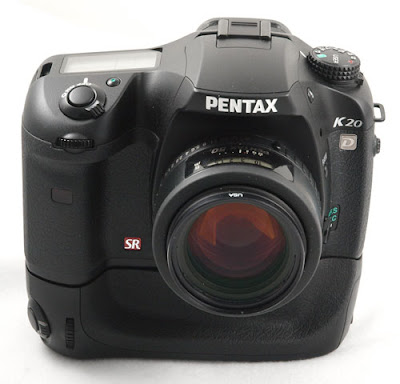
| We can recognise the inspiration of this photoshopped camera, but just imagine an all manual one. |
Thanks for reading, and maybe listening,
Yvon Bourque




 I don’t really need this mid-1970's camera. The last thing I need is another camera. I should sell it on Ebay. On the other hand, I do love the claping sound of the shutter, the wizzing noise of the motor drive, the ease of manual focusing with the split center screen and the simplicity of it all. The Carl Zeiss lens is solidly made of aluminum with numbers engraved instead of stamped on

