
Visitors to this page also liked: See right column.
We honor reciprocal links.
Hi Pentaxian friends.
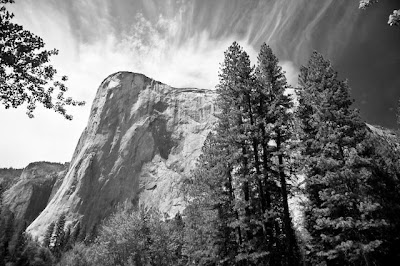
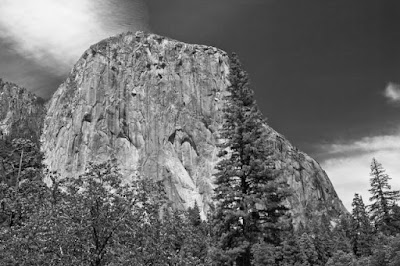
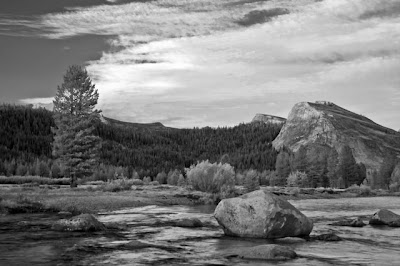
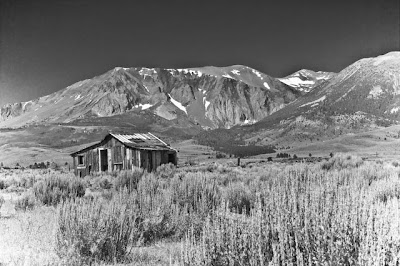
You are in control of your pictures. To quote Ansel Adams; "You don't take a photograph, you make it". In the pictures below, I had an idea of what I wanted as image, but couldn't get there from the lighting conditions of that afternoon. Earlier that morning, it was foggy and I would have liked to take the same picture with the presence of fog. It would have given it an ethereal look, which is what I saw in my mind's eye.
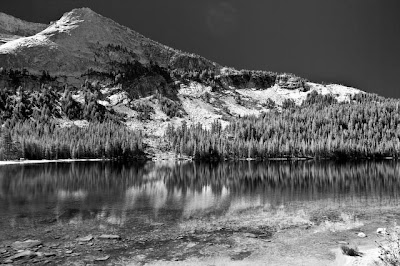
In Lightroom 2.2, I used the vignettes settings in the Develop module. By defining the roundness, the amount of vignetting and the feathering, I was able to get closer to what I wanted. I tried it in Black and White and it too came close to my mind's eye. Finally, using Elements 7, I tried the Diffuser tool and got the result shown in the last photo. It's not what I wanted, but it's different.
You may or may not like this particular image, but my point is that you can create images closer to what you saw in your head, by using the tools available in post-processing software. I see nothing wrong with that. Here's another quote from Ansel Adams; "No man has the right to dictate what other men should perceive, create or produce, but all should be encouraged to reveal themselves, their perceptions and emotions, and to build confidence in the creative spirit".
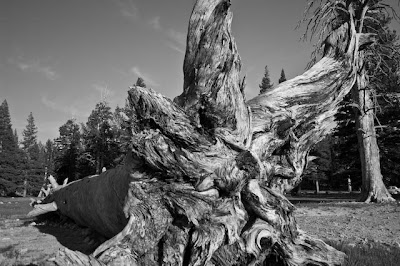
We are taught to always include a human element in our photographs. I kind of agree with that, but sometimes it's just not practical. To that, here's what Ansel Adams answered when someone pointed that out; "To the complaint, 'There are no people in these photographs,' I respond, 'There are always two people: the photographer and the viewer.' "


 I wonder what Ansel Adams would have done with the digital technology? I'm pretty sure he would have pushed the limits. He was that kind of guy. He was pretty smart. Actually, genius is more like it.
Thank you for reading,
Yvon Bourque




 Thank you for reading,