Showing posts with label Telephoto. Show all posts

Monday, February 25, 2013

Do you really need 24 megapixels and more? I would say yes.

Email: brqyvn@gmail.com

Hi Photographer friends,

My first digital camera was a Sony Mavica with a whooping 1.2 Megapixels. I thought it was wonderful and the pictures were actually looking pretty good on my monitor screen. It wasn't quite as good as film cameras yet, but I imagined the possibilities.
 
 
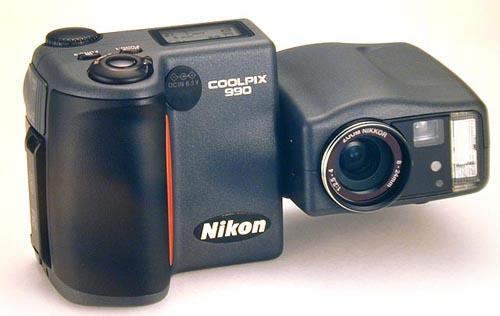
My Second Digital Camera was a Nikon Coolpix 990. It had just a little over 3 Megapixels.  I was able to actually print good 5" x 7" and even ventured to 8" x 10". 
 
 
Then, the real revolution started. Every manufacturer was on board. Nikon and Canon took the lead, but I opted for Pentax, since I always used Pentax SLRs and film cameras. My first Pentax DSLR was a Pentax *ist-D with 6.1 Megapixels. I didn't think it could get any better. It looked like a modern 35mm film camera and even used the same lenses, although cropped because of the sensor APS-C size. Now I was printing up to 11" x 14". What else would anyone want or need?


I now shoot with a Pentax K-5 at 16.3 Megapixels, and suddenly I need more Megapixels.  What happened you say? For a while there was talks about the pixel war and it wasn't the number of pixels that was important anymore, it was the quality of the pixels or photosites.  Computers were not really designed to manipulate big files. Nikon recently announced the D-7100 @ 24 Megapixels.  Pentax's next DSLR will probably have 24 Megapixels as they usually use the same Sony sensors as Nikon does.  Yes, the files will be large and yes your computer might have a hard time to keep up. Note that you don't have to save all of the pictures your camera has on it's memory card, to the computer. Just download the good images and further select the very best images on the bigger screen.


The reason I want an ever expanding sensor size in terms of megapixels, is that you can crop the bigger image files and get a really good and printable images. It saves on buying expensive telephoto lenses, and lord knows how expensive they are. With a 24 Megapixels image, you can shoot a bird with a 50mm lens and crop it so that the bird will occupy most of the image, while still being crisp and clear.
 
 
Of course the trend is now more pixels but also full frame. That's even better. Bigger sensor and even more pixels. The cropping possibilities are endless. Your lens collection will be possibly reduced in number. Cropping is a good thing. It fixes badly composed pictures. It enables cropping to what a 500mm or 600mm lens would have taken. I know, you will bring the fact that the bokeh is not as good as if taken with a real big telephoto. That's true, but if you have that much invested in digital photography equipment, you already have Photoshop or similar software. I believe that almost everyone retouches their images one way or another. It easy to create the bokeh you want in post-processing.
 
I don't shoot birds, but I have one example shot with my K-5 with 16.3 Megapixels. Just imagine if the original image would have been from a 24 Megapixels camera.


There you have my opinion...and if you don't like that one, I have others. :)
 
As always, thanks for reading,
 
Yvon Bourque

Saturday, January 14, 2012

"One camera one Lens" It might be more applicable now than ever before..

Email: brqyvn@gmail.com
The "One Camera, One Lens" applies for all makes, Pentax, Canon, Nikon, you name it. I own Pentax equipment and therefore I show Pentax equipment on this blog.


Hi Photographer friends,

Have you compared  2012 prices of lenses to just a few years ago? Lenses have become more expensive than ever. I believe that the ratio of camera$ / lens$ prices is out of control.

We used to say that the camera bodies were replaceable every-so-often, but that lenses were an investment for life. I don't think that holds true anymore. The sensors are so advanced now, that they often outresolve the lenses, especially the older lenses. So maybe lenses are not a lifetime investment anymore.

In addition, manufacturers are making us believe that, to be a good photographer, we need an arsenal of lenses that we couldn't possibly bring to all of our photo shoots even if we wanted to. Some preach that prime lenses are the only quality lenses one should use, while other recognize that today's zoom lenses are far better than the old school zooms. The reality is that everybody is right, (regarding primes or zooms)  but we don't all have a bank account that allows us to purchase all we want. Most of us have a bank accounts that allows us to  purchase what we need and maybe a little of what we want.

If you want to become a better photographer, all the lenses in the world won't do you much good if you don't learn how to use them efficiently and wisely. An extreme zoom lens or telephoto will bring a far away object in the viewfinder, but the perspective will be all screwed up. It's the same for a wide angle lens, you may catch the scene almost behind you, but the perspective will also be screwed up.

Try to get acquainted with each of your lens, and practice a lot. In most situations, a normal lens (that is a lens that shows you the scene about the same as what your eyes normally see)  will render the best quality images. For an APS-C DSLR, 28 - 30 mm lens is a normal lens, for what we now call "Full Frame", a 45 - 50 mm is a normal lens.

Film/Sensor formatImage dimensionsImage diagonalNormal lens focal length
9.5 mm  8 × 11 mm13.6 mm15 mm
Half-frame24 × 18 mm30 mm30 mm
APS-C16.7 × 25.1 mm30.1 mm28 mm, 30 mm
135- 35mm (Full Frame)24 × 36 mm43.3 mm45 mm, 50 mm
 6 × 4.5 (645)56 × 42 mm71.8 mm75 mm
 6 × 656 × 56 mm79.2 mm80 mm
, 6 × 756 × 68 mm88.1 mm90 mm
 6 × 956 × 84 mm101.0 mm105 mm
 6 × 1256 × 112 mm125.0 mm120 mm
 Large Format 4 × 593 × 118 mm (image area)150.2 mm150 mm
Large 5 × 7  120 × 170 mm (image area)208.0 mm210 mm
Large Format 8 × 10  194 × 245 mm (image area)312.5 mm300 mm

Only after you master photography with a normal lens, should you venture into the Wide Angle, Telephoto and Zoom lenses. Okay...you don't have to, but it would make you a better photographer in the long run.

Even if you currently have an arsenal of lenses, maybe you should spend some time practicing with a normal lens. It's the old adage "One camera, One lens". Most of today's photographers seem to have forgotten the correct usage of each lens. We see photographers stand at the same position and change the angle of view (zoom lenses).  This changes the coverage area without a corresponding change in perspective. Perspective changes not because of the focal length, but due to the position of the lens in relation to the subject. Changing to a normal lens and changing the position of the camera can drastically change the perspective. The "One camera, One lens" teaches you to use your legs (instead of zooming from one position), and puts you,  the camera and the lens in the most appropriate position to obtain the natural perspective. Once you try and practice this, you will get to know each of your lens intimately and will be a better photographer because of it...and who knows what other photographic opportunities will be discovered by walking closer or farther to your subject.

May the light be working with you :)

Thanks for reading,

Yvon Bourque

Saturday, November 20, 2010

Wildlife in the City, with your Pentax. (Recycled post)

Visitors to this page also like "Recommended Reading" on the right column. Email: brqyvn@gmail.com

Hi Pentaxian friends.

With more than 600 posted articles in the past three years, it's inconceivable that readers would surf through all older posts. Some of those posts still apply to today, and in the future, I will be recycling some of the older articles.

We all dreamed at one time or another, as photographers (beginners or Pros), of getting an assignment from National Geographic. Wouldn’t it be cool to be sent on assignment to Africa or Australia to photograph indigenous wild animals? Well, give yourself the assignment. Surely, there is a zoo near you, at least closer than Africa. Visit your local zoo and photograph these wild animals in their natural habitat. "Yeah right you say! These animals are behind bars, surrounded by concrete walls, swimming in a concrete pool; that’s not what we call a natural habitat." Give yourself an assignment to take pictures of wild animals at the zoo, so that it appears that these animals are in the wild. It can be done. You just need to use the right equipment, follow a few rules and settings, and voila. It’s good if you have a fast lens, say f/1.8 to f/2.8. It’s better if you have a telephoto. It’s best if you have a fast f/2.8 telephoto. It’s perfect if your telephoto is a  PENTAX DA Star 200mm F2.8 ED (IF) SDM Telephoto.


When photographing animals in a zoo setting, try to get close to your subject. Use a telephoto or you can crop your image later if getting close is impossible. Use the largest aperture your lens permits as this will make the background blurry and will camouflage man-made structures. Using the telephoto will help even more in that respect. Sometimes, shooting from a low point and looking up to your subject will help, as the sky likely looks the same in the jungle as it does in the City. Position yourself so that the background has as much vegetation as possible. When the background is blurry, vegetation looks the same as if it was from any continent in the world. If there is a chain link fence, put your lens right to the fence (except if the animals can reach) and center the lens with the chain link opening, to minimize seeing the fence. You can crop the edges of the image later on.

Don’t take foolish risks and do obey the park rules and regulations. I hope that by taking pictures of zoo animals, many of which are on the endangered species list, will make all of us understand how important these wonderful creatures are and how beautiful each specie is. Everyday, hundreds of animals are killed for profit or die from disappearance of natural habitat caused by humans. If they all disapear, we too will disapear, eventually. The whole planet is a delicate ecosystem.


Have a pleasant experience, and it would be great to see some of your pictures.
And this next picture, is from the animals' perspective. Another endangered specie.
Later,

Yvon Bourque

Saturday, October 4, 2008

Current Pentax Lenses not good enough for you?


Hi Pentaxians and friends,

Pentax Lenses

How many times have I heard or read that Pentax didn't have enough lenses to compete with the other DSLR makers. Although this may somewhat be true in the extreme telephoto and extreme zoom lenses, I can't imagine it being a reason not to get a Pentax DSLR. The current available new lenses have a range of 10mm all the way on up to 300mm. They are not all f/2.8 or faster lenses, but with the capabilities of today's DSLRs, I'm not convinced that faster lenses are really that indispensable. You also have a choice of good lenses with Sigma and Tamron. Don't discount the used lens market where the Pentax 400mm and 600mm "A" lenses can still be purchased at a decent price. No, they're not AF but there was good photography before AF you know!

It's not uncommon to shoot with a DSLR @ ISO800 or higher with very acceptable results. Also, with the shake reduction technology, depending on the lens in use, steady shots can be achieved at a slower speed and thus smaller aperture. I had a discussion with a friend the other day and he was complaining that in the 35mm era, he could easily get a 300mm f/2.8 lens. Well...giving that all Pentax DSLRs are APS-C sized, and that the photographic community keeps comparing/converting APS-C sized lenses to 35mm lenses, the current DA* 200mm f/2.8 is really the equivalent of a 300mm @ f/2.8 for the APS-C sensors. Other than sport photography, not too many people really need extreme telephoto while not using a tripod. Even sport shooters don't usually shoot handheld. They all use a monopod at minimum.

Thank you for reading,

Yvon Bourque