Showing posts with label Pentax Full Frame. Show all posts

Tuesday, April 19, 2016

Ricoh/Pentax contest for a Pentax K-1 ended today.

Email: brqyvn@gmail.com 

 Hi Photographer friends,

Pentax contest to win a new Pentax K-1 ended today. The winner will be announced on April 26th. Just like everyone, I would like to win the camera. The following is what I entered. 


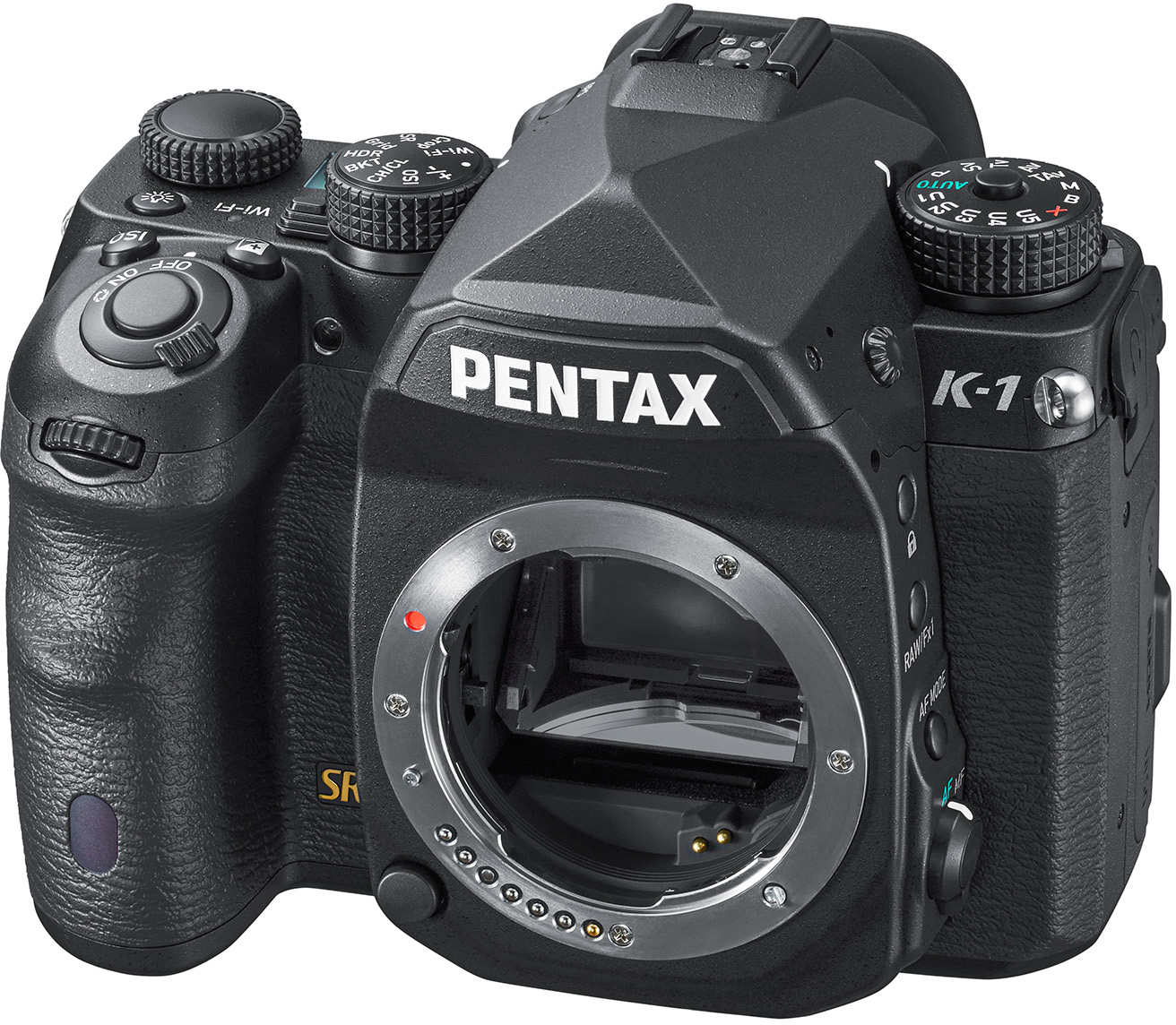
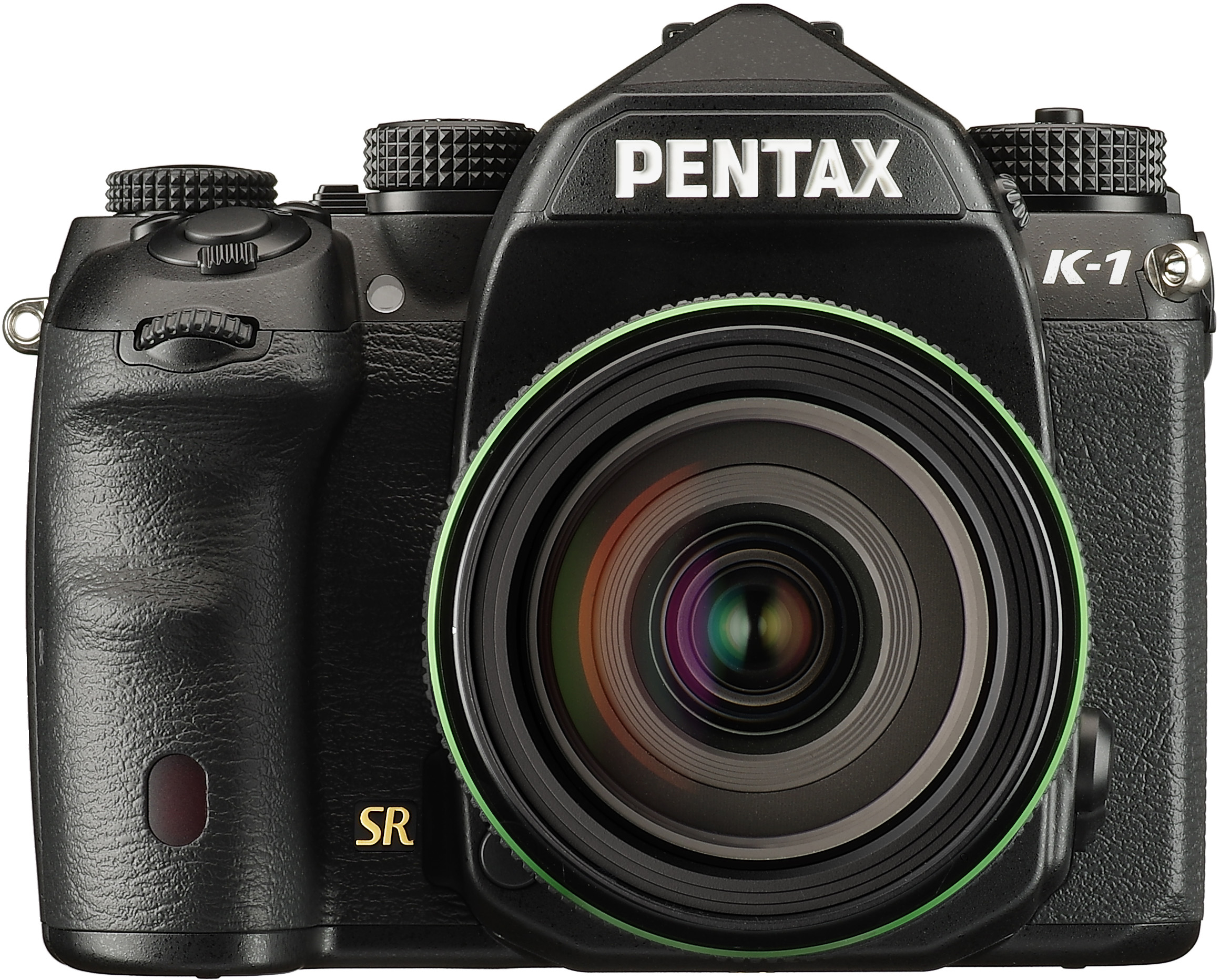
I have taken photographs with Pentax cameras since I was a teenager. My first serious camera was a Pentax Spotmatic, a 35mm film format camera, purchased used when I was still in Junior High. Many, many years later, we have the PENTAX K-1, a Full Frame DSLR. It is probably the best Full Frame DSLR today. It is also the most affordable of its kind. Although Pentax is now owned by Ricoh, the core values of the brand remains as it always has, an innovative brand.

In 2003, Pentax introduced their first marketable DSLR, the *ist-D. I was thrilled. Note that I wrote marketable…because in 2000, Pentax had announced a Full Frame DSLR during the Photokina trade show in Cologne, Germany. It was to be named the MZ-D. It was later demonstrated to the press during the 2001 PMA show in Orlando, Florida. In 2003, the venture was cancelled. The sensor, manufactured by Philips, did not achieved the expected image quality. Fortunately for us, Pentax survived, but it delayed the production of their DSLR cameras. Just imagine, Pentax could have been ahead of most current manufacturers, by introducing a Full Frame DSLR in 2000. Oh well, this was then and this is now.

The K-1 is the best Full Frame DSLR I could ever have imagined. It makes me wonder if there is ever going to be a plateau for image quality.Image quality cannot surpass what we see with our eyes, and it’s already there, I think.

Everything changed again in 2006 when Pentax introduced the K10D. In my opinion, the K10D was a breakthrough. It had the capabilities of Professional DSLRs with the price of entry-level DSLRs. It had some unique features found nowhere else, at any price.

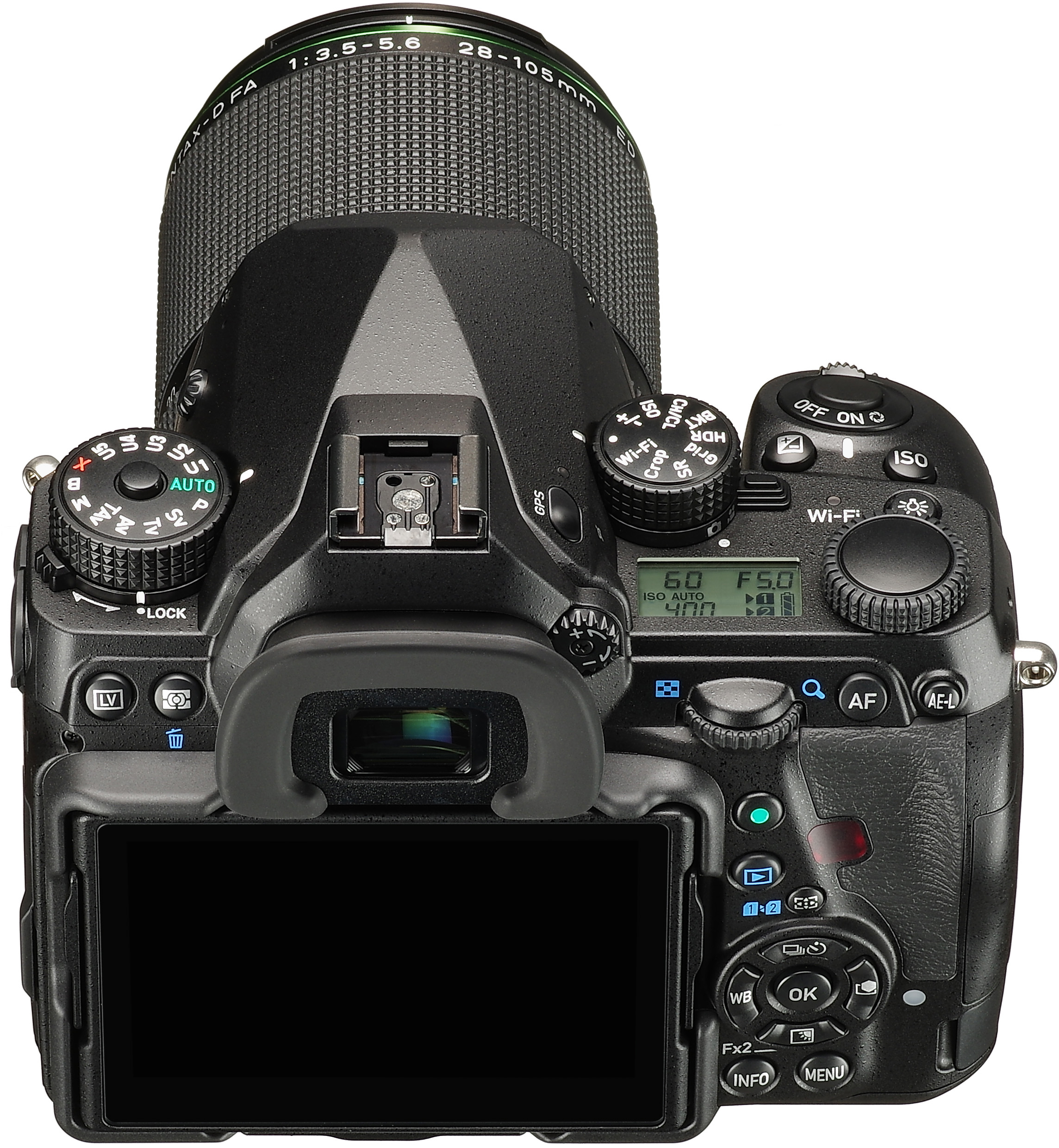
Fast forward to 2016, the core values haven’t changed, but the tools have improved exponentially. The K-1 has a 36.2MP CMOS sensor without anti-aliasing filter, a 100% pentaprism viewfinder, a 33 point AF system in which 25 are cross-type, pixel shift resolution, built-in GPS, Wi-Fi, revolutionary tilt LCD screen, and more. Again, it has some unique features found nowhere, else at any price.

I love Pentax so much that in 2006, I started writing e-books for all the Pentax DSLRs.


Wednesday, February 17, 2016

Email: brqyvn@gmail.com


 Hi Photographer friends,

It's finally here.  See more info at PentaxForums.

The e-book is in progress.


Press Release

January 18, 2016
PENTAX K-1
PENTAX’s first 35mm full-frame digital SLR camera,
and the new flagship model of the popular PENTAX K series,
providing outstanding operability and superb reliability
RICOH IMAGING COMPANY, LTD. is pleased to announce the launch of the PENTAX K-1 digital SLR camera. Developed as the flagship model of the acclaimed PENTAX K series of digital SLR cameras, this new model features a large CMOS image sensor, equal in size to the full image area of 35mm film, to deliver super-high-resolution images required for the artistic work of photo enthusiasts and professionals.

Equipped with a large, high-performance CMOS image sensor (35.9mm by 24.0mm) and supported by approximately 36.4 effective megapixels and PENTAX-original imaging technologies, the PENTAX K-1 assures super-high-resolution images rich in gradation and superb in high-sensitivity rendition. Thanks to its large image sensor, the camera provides the same depth of field as a 35mm film-format camera, and allows the user to create a fine bokeh (defocus) effect more effectively than before. By further advancing its unique technologies, accumulated over decades of camera development, PENTAX has also equipped the K-1 with a host of the latest technologies. A new-generation shake reduction mechanism effectively reduces camera shake along five axes with a compensation range of five shutter steps. This mechanism also shifts the image sensor unit by a single pixel to assure super-high-resolution digital imaging. An extra-accurate exposure-control mechanism is supported by state-of-the-art artificial intelligence technology. Within its compact body, the K-1 also provides an array of PENTAX-original features and functions, such as a flexible tilt-type LCD monitor that can be tilted to the desired angle horizontally and vertically without deviating from the lens’s optical axis; an Operation Assist Light function to facilitate camera operation in the dark; and an optical viewfinder with a nearly 100-percent field of view. In addition to an assortment of interchangeable lenses — from old film-era lenses to the latest D FA-series models — the K-1 also accepts more compact DA-series lenses with a smaller image circle, with the help of its Crop function.

Main Features

1.  High-resolution, fine-gradation images supported by approximately 36.4 effective megapixels
The K-1 incorporates a newly developed 35mm-format full-frame CMOS image sensor —the first time in a PENTAX K-mount digital SLR camera. It also features an AA (anti-aliasing) filter–free design that puts priority on image resolution. Coupled with a high-speed image processing system and the newly designed PRIME IV imaging engine, capable of 14-bit RAW-format image recording, it optimizes the resolving power of approximately 36.4 effective megapixels to deliver super-high-resolution, fine-gradation images. It also allows for super-high-sensitivity shooting up to ISO 204800, and produces beautiful, high-resolution images over the entire sensitivity range — from the lowest sensitivity to the highest — while effectively minimizing annoying noise at all sensitivity levels.

2. New-generation SR II five-axis system

(1) In-body SR mechanism to assure optimal shake reduction performance with all compatible lenses: The K-1 comes equipped with the PENTAX-developed SR II (Shake Reduction II) five-axis mechanism that enables accurate control of the large full-frame image sensor with all compatible PENTAX interchangeable lenses.* In addition to camera shake caused by pitch and yaw, this new system is also designed to effectively compensate for camera shake caused by horizontal and vertical shift (often generated in macro photography) and camera shake caused by roll, which is difficult to deal with by lens-installed shake reduction mechanisms. It has a compensation range of as much as five shutter steps — the widest of all PENTAX digital SLR models — to expand the limits of handheld shooting. Even when taking a panning shot, this system automatically detects the direction of the camera’s movement, and efficiently controls the SR unit to always produce the best image possible without requiring any mode switching operation.

(2) Pixel Shift Resolution System with a new motion correction function
The K-1 features Pixel Shift Resolution System,** the latest super-resolution technology, which captures four images of the same scene by shifting the image sensor by a single pixel for each image, then synthesizes them into a single composite image. Compared to the conventional Bayer system, in which each pixel has only a single color data unit, this innovative system obtains all color data in each pixel to deliver super-high-resolution images with far more truthful colors and much finer details than those produced by conventional full-frame image sensors. This system even provides a new motion correction function,*** which automatically detects a moving object during continuous shooting and minimizes negative effects during the synthesizing process, in order to accommodate a wider range of scenes and subjects.

(3) Innovative AA filter simulator to minimize moiré
By applying microscopic vibrations to the image sensor unit at the sub-pixel level during image exposure, the K-1's AA (anti-aliasing) filter simulator**** provides the same level of moiré reduction as an optical AA filter. Unlike an optical filter, which always creates the identical result, this innovative simulator lets the user not only switch the AA filter effect on and off, but also to adjust the level of the effect. This means that the ideal effect can be set for a particular scene or subject based on given photographic conditions.

(4) Supportive shooting functions
Since the K-1’s SR unit has a flexible design that tilts the image sensor unit in all directions, it provides a host of handy shooting functions, including auto level compensation, image-composition fine-adjustment, and ASTRO TRACER, which simplifies advanced astronomical photography using a built-in GPS module.

* Lenses compatible with this mechanism: K-, KA-, KAF-, KAF2- and KAF3-mount lenses; screw-mount lenses (with an adapter); and 645- and 67-system lenses (with an adapter). Some functions may not be available with certain lenses.
** When using this system, the user is advised to stabilize the camera firmly on a tripod. When a moving subject is captured in the camera's image field, its image may not be reproduced clearly, either in part or as a whole.
*** The movement may not be sufficiently corrected when the object is moving in a certain direction and/or pattern. This function does not guarantee that the movement is properly corrected with all subjects.
**** This function works most effectively with a shutter speed of 1/1000 second or slower. This function may not be combined with some shooting modes, including the Pixel Shift Resolution system.

3. Flexible tilt-type LCD monitor to accommodate various shooting angles

On its back panel, the K-1 features a newly designed, flexible tilt-type LCD monitor, which can be tilted to the desired angle horizontally, vertically or diagonally with a single action, without deviating from the lens’s optical axis. The user can not only tilt it approximately 35 degrees horizontally and approximately 44 degrees vertically, but also pull it out from its base to view the on-screen image from above for waist-level photography. This large, 3.2-inch LCD monitor has approximately 1,037,000 dots and a 3:2 aspect ratio, and provides a protective tempered-glass front panel for added durability. In addition to its wide-view design, it also features a unique air-gapless construction, in which the air space between LCD layers is eliminated to effectively reduce the reflection and dispersion of light for improved visibility during outdoor shooting. A new Outdoor View Setting mode allows the user to instantly choose the desired monitor brightness level with a single push of a button.

4. Newly developed SAFOX 12 with 33 sensor points and full-frame-proportioned AF frame

The K-1 features a newly developed SAFOX 12 AF sensor module with an expanded AF frame covering the full-frame image field with 33 AF sensors (25 cross-type sensors positioned in the middle). The center sensor and the two sensors located just above and below it are designed to detect the light flux of an F2.8 lens, making it easy to obtain pinpoint focus on a subject when using a large-aperture lens. Working together with the advanced PENTAX Real-Time Scene Analysis System, this AF system assures much improved AF tracking performance when photographing fast-moving subjects.

5. Upgraded PENTAX Real-Time Scene Analysis System, with application of artificial intelligence technology

By combining an approximately 86,000-pixel RGB metering sensor with the new PRIME IV imaging engine, the K-1’s advanced PENTAX Real-Time Scene Analysis System performs real-time analysis of the brightness distribution over the image field and the subject’s colors and movement. Based on this data, it then measures the subject’s lighting conditions with great accuracy and optimizes the exposure.  In addition, by adopting a breakthrough artificial intelligence technology called deep learning to its algorithm,* it assesses each individual scene more accurately, and optimizes the exposure settings for a given scene or composition.

* Effective when the AUTO exposure mode is set to Scene Analyze Auto and the Custom Image mode is set to Auto Select.

6. Easy-to-focus optical viewfinder with nearly 100-percent field of view

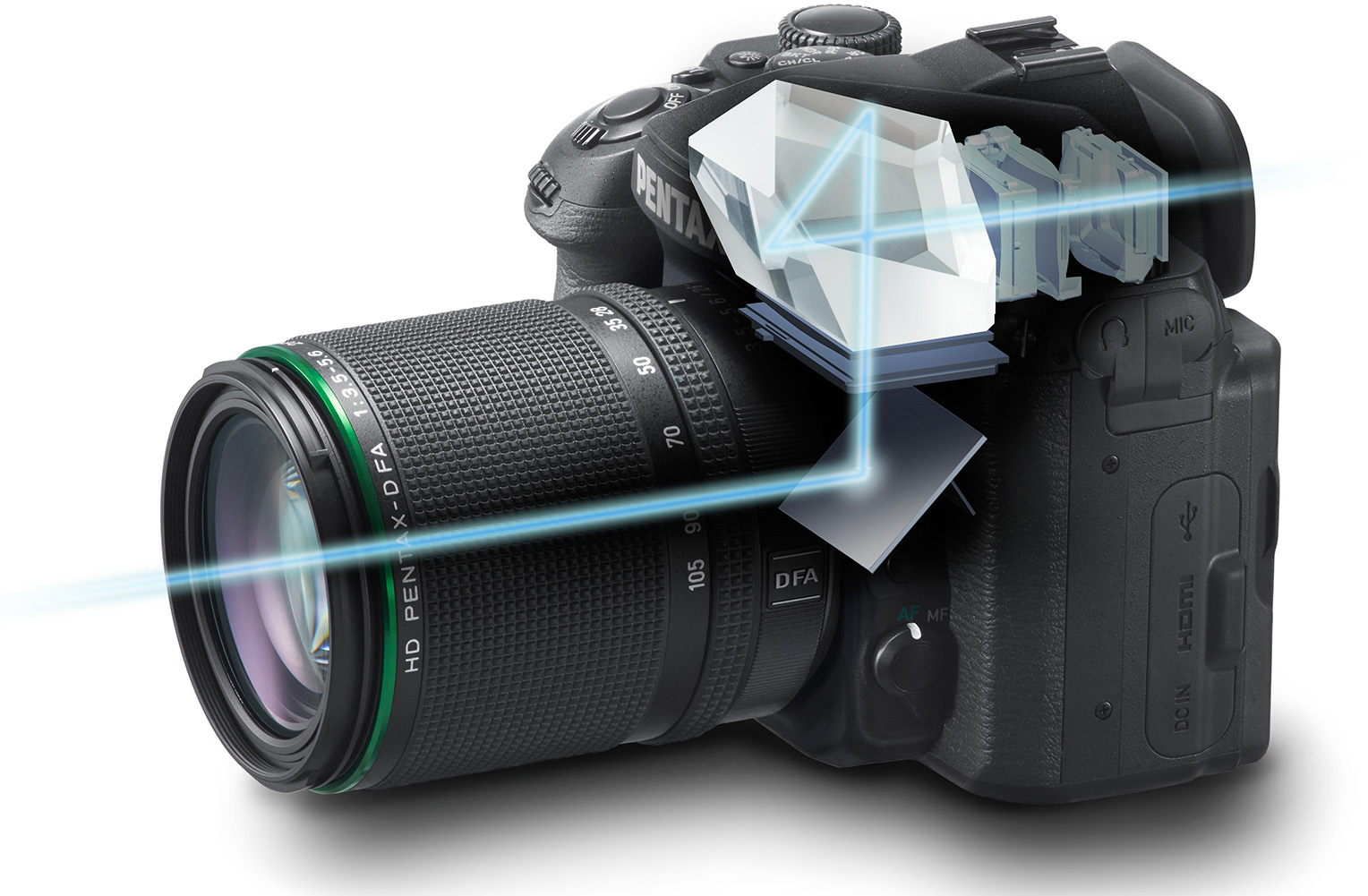
Newly developed for its 35mm full-frame design, the K-1’s optical viewfinder provides a nearly 100-percent field of view and an approximately 0.7-times magnification. It comes with a Natural Bright Matt III focusing screen, which is acclaimed for ease of focusing during manual-focus operation and a true-to-life rendition of defocused areas in the viewfinder image. In addition, its transparent viewfinder display makes it possible to superimpose a wide range of photographic data over the viewfinder image.

7. High-speed continuous shooting with a top speed of approximately 4.4 images per second

The K-1 has a larger shutter unit, which is newly designed to accommodate the camera’s full-frame image sensor. It also incorporates a range of new mechanisms to provide high-speed, high-accuracy control of the mirror unit, including a damper mechanism that effectively minimizes mirror shock. A high-speed data transmission system incorporated in the PRIME IV imaging engine allows the user to continuously record as many as 17 images in the RAW format (or a maximum of 70 images in the JPEG Best format) in a single sequence, at a top speed of approximately 4.4 images per second.


8. Supportive shooting functions to improve picture-taking efficiency and operational comfort

·Operation assist light function, which provides LED lights at four different spots around the camera body (above the lens mount, behind the LCD monitor, at the memory car slot, and at the cable switch terminal) to facilitate lens and memory card changes, attachment and removal of a cable switch, and control button operation at night and in poorly lit settings.
·Key lock function, which prevents erroneous operation of the four-way controller and other exposure-related control buttons.
·Smart Function, which allows the user to swiftly choose and set desired functions using just the function dial and the set dial on the camera’s upper panel, without referring to the menu screen on the LCD monitor.
·Control panel customize function, which allows the user to change a listing and/or position of the on-screen menu.

9. Compact, solid body with dustproof, weather-resistant construction

The K-1's top panel and front and back frames are all made of sturdy yet lightweight magnesium alloy. Although the camera features a dependable, durable shutter unit that can withstand 300,000 shutter releases (measured under actual shooting conditions) for professional use, its body has been downsized to the minimum, thanks to the incorporation of a newly designed floating mirror structure. With the inclusion of 87 sealing parts in the body, the K-1 also boasts a dustproof, weather-resistant and cold-resistant construction, assuring solid operation at temperatures as low as -10°C. All these features make the K-1 a dependable, all-purpose performer, even under demanding shooting conditions.

10. Wireless LAN connection to support smartphone operation

The K-1 provides a host of wireless LAN (Wi-Fi) functions to support the operation with smartphones and tablet computers. By installing the dedicated Image Sync application in a mobile device, the user can remotely check the live-view image, capture still images, and adjust such camera settings as aperture, shutter speed and ISO sensitivity to the desired level through the mobile device. It is even possible to download captured images onto the mobile device, then upload them on social networking service websites.

11. Full HD movie recording with an array of creative tools

The K-1 captures Full HD movie clips (1920 x 1080 pixels; 60i/30p frame rate) in the H.264 recording format, and comes equipped with a stereo mic terminal for external microphone connection and a headphone terminal. The user can also adjust the audio recording level manually, monitor sound pressure levels during microphone recording, and cut down wind noise using a new wind noise reduction mode. In addition to a host of distinctive visual effects available for movie recording,* the K-1 also provides the interval movie mode, which captures a series of 4K-resolution (3840 x 2160 pixels) movie clips at a fixed interval.

* When special image processing is required, the frame rate may vary depending on the selected special-effect mode.

12. Built-in GPS module

Thanks to its built-in GPS module, the K-1 provides a variety of advanced GPS functions, including the recording of location, latitude, longitude, altitude and UTC (Universal Time Coordinated) and direction at the time of shooting. The user can easily access images containing GPS data using a computer, to browse them, check on shooting locations and position data on the screen, or save them.
The K-1 also provides a set of other unique tools, including: Electronic Compass, which displays the camera's direction on its LCD monitor; GPS log, which keeps track of the photographer's movement; and ASTRO TRACER, which simplifies the tracing and photographing of celestial bodies by coupling GPS data with the camera's SR mechanism.

13. Other features

·High-grade DRII (Dust Removal II) mechanism for effective elimination of dust on the image sensor using ultrasonic vibration
·Crop mode with a choice of image area from AUTO, FF (Full Frame) and APS-C, to accommodate different types of lenses
·Clarity control and Skin Tone correction functions, a pair of the latest image processing technologies developed by RICOH Central Laboratory
·HDR (High Dynamic Range) shooting mode with RAW-format data filing, usable in handheld shooting
·The PENTAX-invented hyper operating system for quick, accurate response to the photographer's creative intentions
·Dual SD card slots for memory card flexibility (compatible with SDXC UHS-1 speed class in SDR104 buss speed mode)
·Compensation of various parameters: lens distortion, lateral chromatic aberration, diffraction, and brightness level at image-field edges. Fringe effect compensation is also available in RAW-format processing.
·Compatibility with PENTAX Image Transmitter 2 tethering software (Software update required from RICOH IMAGING official website)
·Digital Camera Utility 5 software (latest version) included

Optional Accessories

D-BG6 Battery Grip
A battery grip for exclusive use with the PENTAX K-1 camera body. Designed to facilitate vertical-position shooting, it provides a shutter release button, a set of control buttons (AE lock, AF, ISO, exposure compensation, green), a preview lever, and dual electronic dials — just like those provided on the camera body. It also features the dustproof, weather-resistant construction identical to the PENTAX K-1 camera body. In addition to the dedicated lithium-ion rechargeable batteries, it also accepts six AA-size batteries.

-All other brands or product names mentioned herein are trademarks or registered trademarks of their respective companies.
-Designs and specifications are subjects to change without notice.


Read more at: http://www.pentaxforums.com/articles/pentax-news/pentax-k-1-officially-announced.html#ixzz40TVfoXFR


Now, for you Pentax owners, I do have e-books for most of the Pentax DSLRs. You can check this site ebooks4cameras.com and even download any e-book for checking the contents.


Click on the image above to visit our e-book store. You can also download sample e-books and get the free AF front and back focusing adjustment charts at this e-commerce.

Saturday, February 13, 2016

Pentax K-1 reality is close. See new pictures.

Email: brqyvn@gmail.com

 Hi Photographer friends,

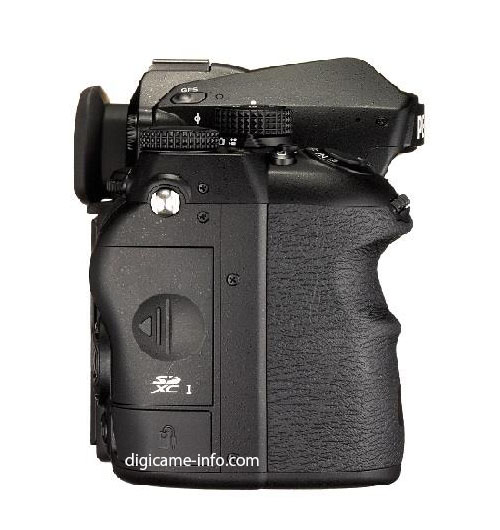
Here are some real photos of the upcoming Pentax K-1 These were posted by Pentax Rumors. Click on the link below for the full article.

Pentax Rumors

 Specifications:
  • Number of pixels: effective 36.4MP
  • Sensor Size: 35.9 x 24.0mm
  • Continuous shooting: 6.5 fps
  • ISO range: 100-204,800
  • Build-in GPS
  • Media: SD, SDHC, SDXC
  • Size: 136.5 x 110 x 85.5mm
  • Weight: 925g
Now, for you Pentax owners, I do have e-books for most of the Pentax DSLRs. You can check this site ebooks4cameras.com and even download any e-book for checking the contents.


Click on the image above to visit our e-book store. You can also download sample e-books and get the free AF front and back focusing adjustment charts at this e-commerce.


Monday, February 8, 2016

Sunday, December 6, 2015

I was a little disappointed about the Pentax K-1 Full Frame delay. No new Pentax DSLR for Christmas.

Email: brqyvn@gmail.com 


Hi Photographer friends,

I was a little disappointed about the Pentax K-1 Full Frame delay. No new Pentax DSLR for Christmas! It seems like I have been able to introduce a new e-book every Christmas. I will certainly write another e-book for the Full Frame K-1, but in the meantime, I needed to write something.

So I did, or I currently am. I got to think of it and realized that there was no e-book or paper book for the Pentax system since they went digital. My new e-book, "The Pentax Digital System" will fill the void. It is a complete review of all Digital APS-C  and  Medium Format DSLRs produced by Pentax since 2003, including the attempt at a Full Frame back in 2000 with the Pentax MZ-D. When the K-1 Full Frame DSLR is finally released, a free update of the "The Pentax Digital System" will be available. Of course, a new e-book for the K-1 will also be available.


All my e-books are available for free when they are updated. Just check ebooks4cameras.com once in a while to see if there is new revisions. All I need is your receipt or the date you purchased the e-book, and of course your name so that I can search my database.

The new e-book contains specifications for all DSLRs, images, explanation of functions, Pentax unique features, typical menus, how to use Pentax DSLRs, Photography tips and tricks, exercises, Photography rules, list and review of ancillary equipment (Pentax and third parties), and more.

The  "The Pentax Digital System" cannot contain as much information as each DSLR dedicated e-books, because it would be so big, nobody could download it. More model specific e-books can be found at ebooks4cameras.com

However, if you want/need to know everything about the digital generation of the Pentax DSLRs, you will need this e-book.

Thank you for reading,

Yvon Bourque


Friday, October 16, 2015

Lots of rumors about the Pentax Full Frame, but some disappointment about its late release.

Email: brqyvn@gmail.com

 Hi Photographer friends,

There is a lot of speculations and rumors about the upcoming Pentax Full Frame DSLR. I am disappointed that its release has been postponed to the spring, as it was supposed to be announced on October 6th. Rumor has it that the delay was caused by problems they had to fix on the Pentax K-3II!

I personally would have preferred the new Full Frame to the upgraded. Ricoh Theta S. The theta, which I have, is more of a gadget than a serious camera. It's fun for a little while but I don't think it will change the photographic world. Of course, this is just my opinion, and some of you might see that as a great innovation.


The Ricoh GRII kit was introduced lately, but it doesn't add any capability to the compact camera. Perhaps Ricoh is buying time for us to be patient in waiting for the Full Frame.


Here are some of the rumors:
Looking at the 3 layers composition, I am wondering if they are going to use a foveon sensor!


So...what happened to October 6th?


Thanks for reading,
Yvon Bourque


Click on the image above to visit our e-book store. You can also download sample e-books and get the free AF front and back focusing adjustment charts at this e-commerce.

Wednesday, February 4, 2015

Confirming my posts of the recent two weeks, Ricoh / Pentax announces the Full Frame DSLR.

Email: brqyvn@gmail.com

 Hi Photographer friends,

Confirming my posts of the recent weeks, Pentax announces the Pentax Full Frame camera as well as two new D-FA* lenses for Full Frame DSLR. There will be no need to replace your DA lenses as the DSLR will have a crop mode, most likely better than what Nikon developed.

******************************************************

February 4, 2015 - RICOH IMAGING COMPANY, LTD. is pleased to announce the exhibition of a reference product – a digital SLR camera currently under development. The product will be displayed at “CP+” one of the largest and most comprehensive camera and imaging shows in Asia, from February 12-15, 2015 at the PACIFICO Yokohama Convention Center in Japan.

CP+, originally known as the “Japanese Camera Show”, has over 50 years of history and draws more and more imaging enthusiasts each year. In 2014 over 42,000 people were in attendance over the course of only 3 days.


This is a composite of what we know and what I think it will look like.
Maybe with a battery grip.


RICOH IMAGING will display the following:
Digital SLR camera
Product name: To Be Determined

K-Mount digital SLR camera with a large, 35mm full-frame image sensor

Compatible with DA-series interchangeable lenses, using an image cropping function

Currently under development for market launch by the end of 2015

**********************************************************


Ricoh Imaging Broadens Lens Line-up-Providing Photographers with Two New Options to Capture Outstanding Sports, Action and Landscape Photography.

With the Introduction of the HD PENTAX D FA ★ 70-200mm F2.8 and the HD  PENTAX D FA 150-450mm F4.5-5.6, photographers have exceptional lens options to use with current and future imaging sensor technology. 

DENVER, Colorado, February 4, 2015- RICOH IMAGING AMERICAS CORPORATION is pleased to announce the launch of two new HD PENTAX D FA Lenses. Designed for use with current PENTAX K-mount DSLR cameras and future PENTAX sensor technology, these lenses offer ranges not found in previous PENTAX lens models, including a star-series telephoto zoom and super- telephoto zoom ideal for capturing clear images of distant subjects and weather resistant for shooting 
in all conditions.

The HD PENTAX D FA lenses feature a high-grade HD Coating which helps to produce extra-sharp, high-contrast images, minimizing flare and ghosting, even under demanding lighting conditions such as in backlight situations. 

The HD PENTAX-D FA★ 70-200mm F2.8ED DC AW has a brand new optical design in the PENTAX Star (★) series, which boasts the highest image quality of all PENTAX interchangeable lenses. In addition to the HD coating, this lens features Aero Bright Coating II, assuring exceptionally low reflectance. Thanks to its large- constant aperture design, the lens provides an accelerated maximum aperture of F2.8 at all focal lengths from 70mm to 200mm. In addition to four super-low dispersion glass elements and two ED (Extra-low Dispersion) glass elements, its optics includes a pair of new Super ED glass elements to effectively compensate chromatic aberration over the entire zoom range and deliver crisp, high-resolution images with edge-to-edge sharpness. Its dustproof, weather-resistant body also makes it extremely dependable and durable in demanding outdoor conditions. This new lens boasts fast yet quiet internal focusing, zoom versatility, and an AF limiter switch which improves autofocus response time.

The HD PENTAX-D FA 150-450mm F4.5-5.6ED DC AW covers focal lengths from 150mm to 450mm — a focal-length range demanded by higher end PENTAX-camera users. Also incorporated are three ED (Extra-low Dispersion) glass elements and a super-low dispersion glass element to effectively compensate chromatic aberration. The highly desirable weather-resistance body protects the inside of the body from both dust and moisture, making it an extremely dependable and durable DSLR accessory in demanding outdoor conditions.

“Ricoh Imaging continues to provide quality and performance in lens construction,” said Jim Malcolm, President, Ricoh Imaging Americas Corporation. “With the addition of two new zoom lenses, we demonstrate our commitment to helping photographers reach their full potential.”

Pricing and Availability

Both the HD PENTAX-D FA★ 70-200mm F2.8ED DC AW and HD PENTAX-D FA 150-450mm F4.5-5.6ED DC AW will be available in March 2015 at both www.ricohimaging.com and retail outlets nationwide with the following suggested retail prices:

- HD PENTAX-D FA★ 70-200mm F2.8ED DC AW- $2299.95

- HD PENTAX-D FA 150-450mm F4.5-5.6ED DC AW- $2499.95

Wednesday, January 7, 2015

Here is some new details on the new Pentax DSLR camera Ricoh announced at the CES 2015. You can anticipate all the new attributes to also be incorporated in the 2015 release of a full frame Pentax.

Email: brqyvn@gmail.com

 Hi Photographer friends,

Here is some new details on the  new Pentax DSLR camera Ricoh announced at the CES 2015. You can anticipate all the new attributes to also be incorporated in the 2015 release of a full frame Pentax.

  1. Built-in Wi-Fi (That's great)
  2. Dual control wheels
  3. Fully articulating LCD (Long anticipated)
  4. Weather sealing
  5. Video mode on the on/off switch

Wednesday, March 19, 2014

Check this new interview by Imaging Resource with Ricoh/Pentax.

Email: brqyvn@gmail.com

 Hi Photographer friends,


See the Ricoh/Pentax Facebook page for additional details.

Thanks for stopping by,

Yvon Boueque

Wednesday, December 3, 2008

Careful What You Wish For

by Miserere


Reading Yvon's preceding post on Bruce's purchase of a Nikon D700 got me thinking, so I decided to quickly write down what was racing from my brain down through my fingers.

I can certainly see the allure of the D700. I spent Thanksgiving in a dark house trying to photograph children at ISO3200 on a K100D Super. Even with the f/1.8 afforded by the fabulous Pentax 31 Ltd, shutter speeds were not fast enough, and the IQ of the pics is far from great. I may print a few on 8x10 and see what they look like, but details on screen look poor. I'd love to have usable ISO 64000 in these situations! But I cannot afford a D700. I, like countless photographers before me (and scores after me, no doubt) will have to work around the limitations of my equipment, and my equipment is determined by my budget.

Yvon is quite right: If Pentax were to introduce a full-frame camera it would not be priced below $2,500 (and even that price would be great for a FF). Would Pentaxians complain? I wouldn't be surprised if the forums melted down with cries of anger.

If Pentax finally roll out the mythical 645D I doubt it's going to cost less than $6,000, on top of which you will have to buy a whole host of new lenses for it. Will the standard, regular Pentaxian buy it? Not a chance! I don't think people realise just how NOT portable the 645D will be. You won't be hanging it from your shoulder and going out for a stroll with it; you won't just throw it in your bag on your way out of the door. This will be a camera for the semi-professional landscape or studio photographer who produces serious work, but cannot justify the expense of a Hassie, Leica or other medium format camera. Will Pentaxians complain? You bet!

I am actually worried that Pentax have announced that they'll probably pursue the 645D. For the reasons mentioned above, I doubt they'll sell many of them and cannot imagine they will make a significant profit. As Pentax only have limited resources, any manpower channelled into the 645D project is going to be at the expense of the APS-C camera and lens line. Imagine they invest a large amount of money in this new project and never make it back; what would happen to Pentax? Could it bankrupt the Imaging division? Is Hoya willing to take such a gamble?

I believe Pentax will introduce a FF camera when/if it becomes clear that it's going to become the standard for amateur cameras. At this point they will discontinue their APS-C camera line (or maybe keep one as an entry-level model) and start producing FF lenses. I think this is the only way it makes sense for Pentax given their limited budget and production capabilities. Any other approach might ruin them, and none of us wishes the demise of Pentax, right?

So be careful what you wish for, my friend.

Tuesday, November 25, 2008

Is the Image Circle of the Pentax DA 70mm Ltd big enough for Full Frame? (L'article est aussi en Français.)


Oops...The top row flower pictures should read as follow, left, @ f8, middle @ f22 and right @ f 2.4


Hi Pentax friends,
(Lisez en Français au bas de la page).

About one Month ago, I casually tested all my DA and DA* lenses on a 35mm Pentax PZ-10 to see if the image circle would cover a full frame sensor, should Pentax ever build such DSLR. I was surprised that many lenses were actually useable on a full frame recording media. I know…Pentax still doesn’t have a Full Frame sensor, but you never know.

I received some comments and many e-mails asking for a more thorough test of the lenses. I don’t test anything in a laboratory. I test everything I purchase or use in real time, in the real world, by taking real photographs. I’m never going to change, I'm too old for that.

So…I tested the Pentax DA 70mm f 2.4 Ltd in, you guessed it, real time, in the real world, by taking real photographs. Here’s how I proceeded: I used a Pentax ZX-30 35mm SLR (to simulate a Full Frame sensor) with the DA 70mm and took three pictures at close range at f 2.4, f 8, and f 22, and three pictures at a much greater distance, close to infinity, with the same apertures. With the ZX-30 mounted on a tripod, I took the pictures using the timer. The film used was Fuji ISO 400. Then I used the K20D with the same lens, mounted on the same tripod, at the same location, set at ISO 400 equivalent and repeated the above procedures.

Of course, the DA 70mm remains a 70mm lens on the ZX-30 but performs as a 105mm lens with the crop factor of 1.5 of the APS-C sensor. The results above are more or less self-explanatory. The DA 70mm will work in the event that Pentax ever introduce a Full Frame DSLR. Feel confident that if you already purchased a DA 70mm, or plan on purchasing one, it will work just fine on a Full Frame DSLR. The 35mm film negatives were inherently cropped a little in the scanning process, but not enough to compromise any pictures.

I will test all the DA and DA* lenses I have in the coming weeks, using the same method. It's not very scientific, but it worked for me. It's what I wanted to know and already suspected.

Thank you for reading,

Yvon Bourque

P.S You may want to read these previous posts about the same subject. (Link) (Link) (link)


Salut mes amis Pentaxistes,

Il y a environ un mois, j'ai examiné tous mes objectifs DA et DA* avec un appareil 35mm de Pentax, le PZ-10, pour voir si le cercle d'image couvrirait une pellicule mesurant 24mm x 36mm. Il est toujours possible que Pentax construisera une telle camera. J'ai été étonné que beaucoup d'objectifs fussent réellement utilisables sur de pleins médias « 24mm x 36mm ». Je sais que Pentax n'a toujours pas pris une décision, mais vous ne savez jamais.

J'ai reçu quelques commentaires et beaucoup d’e-mail demandant un test plus complet des objectifs. Je n'examine rien dans un laboratoire. J'examine tout ce que j'achète en utilisation en temps réel, dans le monde réel, et en prenant de vraies photos. Je ne vais jamais changer, Je suis trop vieux pour cela.

Alors… j'ai examiné le DA 70mm f 2.4 Ltd de Pentax ci-dessus, vous l.avez deviné, en temps réel, dans un monde réel, et en prenant des vraies photos. Voici comment j'ai procédé : J'ai employé un Pentax ZX-30 35mm SLR (pour simuler une pleine vue 24mm x 36mm) avec le DA 70mm et j’ai pris trois photos avec une aperture de f 2.4, f 8, et f 22, et trois autres photos à une distance beaucoup plus grande, près de l'infinité, avec les mêmes ouvertures. Le ZX-30 monté sur un trépied, j'ai pris les photos. Le film utilisé était ISO 400 de Fuji.

Ensuite, j'ai employé le K20D avec la même lentille. Je l’ai monté sur le même trépied, au même endroit, avec l’ISO 400 équivalent et j’ai répétée les mêmes procédures ci-dessus. Naturellement, le DA 70mm reste un objectif de 70mm sur le ZX-30 mais deviens comme un objectif de 105mm avec le facteur de 1.5 d'APS-C. Les résultats ci-dessus sont plus ou moins explicites. Le DA 70mm seras adéquat au cas où Pentax poursuivrais la réalisation d’une camera pleine vue « Full-Frame ». Soyez confiant que si vous avez acheté une lentille DA 70mm, ou vous planifiez d’en acheter une, elle fonctionnera très bien avec un DSLR pleine vue.
Je vais tester tous les objectifs DA et DA* que je possède dans les prochaines semaines, en suivant la même méthode. Ce n’est pas très scientifique, mais je suis confiant des resultats. C’est ce que je voulais savoir et avais déjà suspecté.

Merci pour votre visite,

Yvon Bourque

Wednesday, October 29, 2008

Editorial: Where will Pentax go from here?

Dictionary:
editorial (ĕd'ĭ-tôr'ē-əl, -tōr'-) ';}// -->n.
1. An article in a publication expressing the opinion of its editors or publishers.
2. A commentary on television or radio expressing the opinion of the station or network.

To begin with, understand that Pentax's future as depicted herein is strictly an opinion or dream of mine and this editorial is not intended to be another rumor about what’s next for Pentax.

In the old days, (1950 -1970) Pentax had a much greater share of the camera market than they have today. They were the first in many of the cameras development worldwide. Here is a brief history:

Ever since Pentax introduced their first 35mm SLR in 1952, the Asahiflex I, backward compatibility has been a strong reason for owning a Pentax camera. This is still true today. Here is a partial list of Pentax innovations:


In 1952, the Asahiflex I was the first Japanese camera introduced to the world. Unlike its competitors, the camera was not a replica of German technology.

In 1954, the Asahiflex II was the world’s first instant return mirror system.

In 1957, The Asahi Pentax model used a pentaprism in the viewfinder of a Pentax single lens reflex (SLR) camera, introducing the concept of eye-level viewing. It was the first camera to be marketed under the name Pentax.

In 1964, Pentax introduced its Spotmatic camera featuring the first through-the-lens (TTL) metering system in a Pentax camera.

In 1971, the Pentax ES SLR camera, the world's first SLR camera with a TTL aperture-priority AE control, was introduced. Pentax also introduced the Super-Multi Coating (SMC) system for the Asahi Optical Takumar lens series. Other manufacturers followed suit.

In 1981, Pentax introduced the first through-the-lens autofocus camera, the Pentax ME-F.

In 1984, Pentax produced the world’s first multi-mode medium format camera, the Pentax 645.

In 1987, Pentax introduced the SF-1, an autofocus camera with the world’s first AF SLR with a built-in auto flash.

In 2006, Pentax announced the Pentax K10D, making history again with this revolutionary camera. It is followed by the K20D in 2008.

All the above confirm that at one time, the Pentax name was well known worldwide. Pentax cameras were selling more than Nikon or Canon. Everyone knew about Pentax and so many had Pentax 35mm cameras. Back then, the "Pros" were using Nikons F series, Leicas, etc. Even back then, Pentax cameras were aimed at the amateurs photographers, especially the 35mm market.

Pentax did cater to the Professional photographers by introducing the Pentax 645 and the Pentax 67.

These medium format cameras were very popular, and they still are well respected by "Pros" still shooting film. To me, it looks like Pentax might use a similar approach with the Digital cameras.

Did you know that only about 5% of the cameras sold are the "Pro-models" costing thousands of dollars? Yes, the "Pros" do need durable cameras that can withstand abuses. Although the big thing now is the Full-Frame DSLRs, my guess is that the Full-Frame sensors will be replaced in the not-so-distant-future with the Medium Format equivalent, such as the Hasselblads, the Mamiyas, the Sinars, etc,. That's what the "Pros" will start using. The price of these Medium Format equivalent DSLRs will likely come down.

Pentax has already designed a Medium Format DSLR but it was put on hold. Why? My guess is that the demand for non-Professional cameras is Hughes and the price for large sensors is still too high. Computers still have problems with very large digital files, but computers and software will improve exponentially in the years to come. What makes sense to me is a scenario where Pentax would continue making DSLRs with the current APS-C sized sensors, which are getting cheaper and better all the time (Look at the K20D CMOS 14.6 sensor), until the price of large sensors suitable for Medium Format equivalent are affordable.


Then, they could use the "already designed Pentax Digital 645 SLR" with a new large C-MOS sensor and introduce it as a new Professional platform. Right now the money is in DSLRs (APS-C and FF). It is forseable that through 2009 , more people will upgrade from point & shoot cameras than ever before. Soon, almost every home will have a DSLR, just like nearly every home had a 35mm SLR prior to the digital revolution. Amateurs would have the current platform and "Pros" would have a new platform with incredible image quality.

On the other hand, who knows what technology will bring in the next five years? Digicams capable of producing high resolution videos as well as 24+MP still images? Holographic cameras? Heck...maybe cell phones with all of the above capabilities. I guess it's all about timing and luck. The 80/20 rule may still apply here; 20% timing and 80% luck, or 20% product and 80% marketing.

Thank you for reading,

Yvon Bourque